
Restaurant review: Sushi Mamoru
Because you can't take it with you #YOLO

One of the many perks of living in Hong Kong is the close access to Japan and the abundant of sushi-ya they have. Thus, I never thought it necessary to eat expensive sushi in Hong Kong. However, after following Chiba san on Instagram for a while, I made the bold decision to spend $1800HKD to meet him in real life and learn about sushi from him.
I was lucky enough to be the sole diner during the lunch service so able to receive Chiba san’s full attention and keep pestering him (or his translator) with questions.
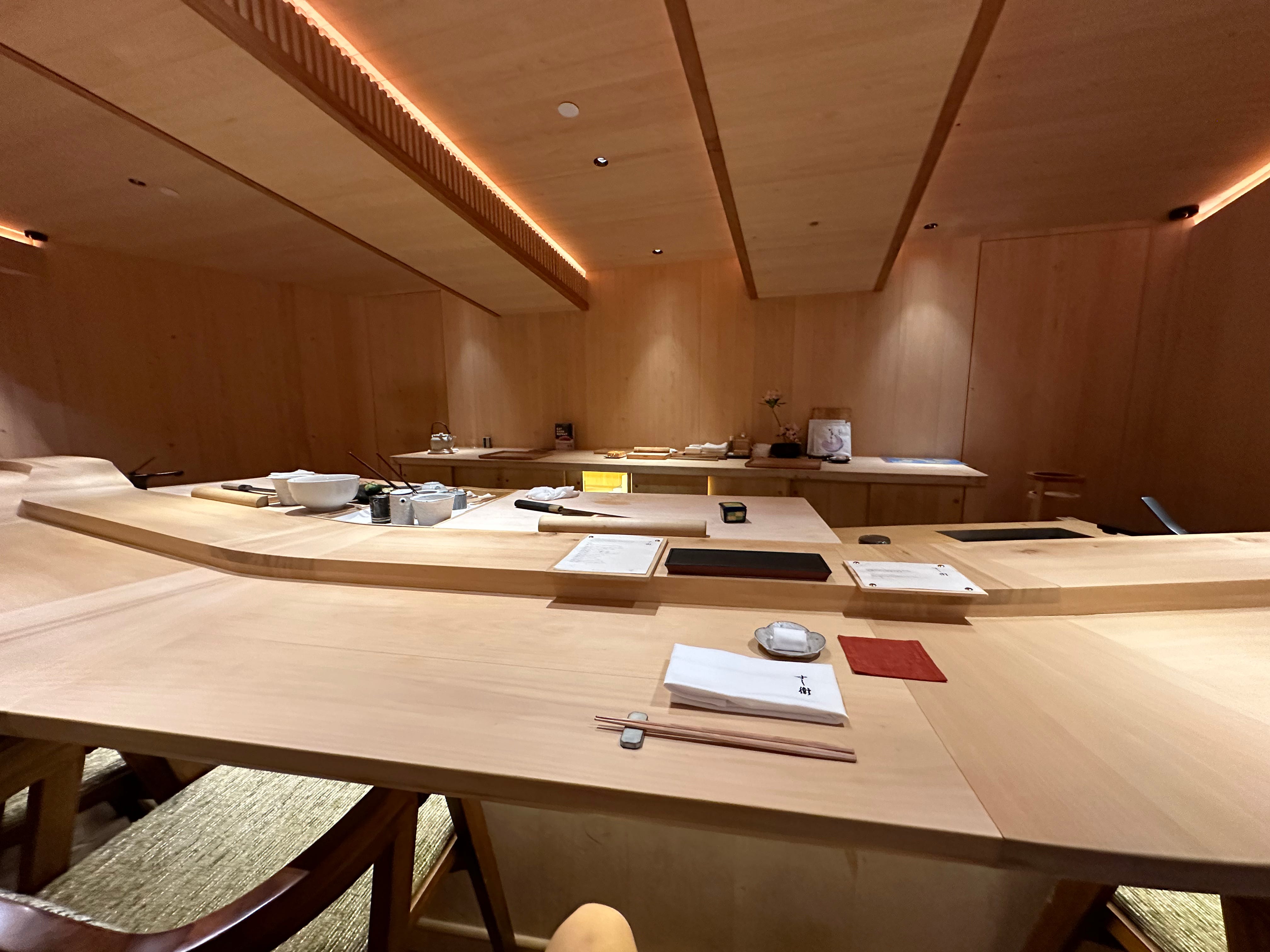
It is pointless to go through each and every source served but let’s just highlight a few mind-blowing bites and tidbits I learnt during this 15 course lunch. Of course, the food was phenomenal and instantly transported me back to Japan but it is the experience that really stays with me. I may not remember the exact taste of a fish but I’ll always remember how Chiba san acknowledged my love for white-fleshed fish and gave me two pieces of white-fleshed nigiri that he used for the opening sashimi.
The common denominator of my favourite bites of the day is Chiba san’s way of complementing different ingredients together to make the overall bite better. Such example is the aji with oba (relative to shiso) which adds another layer of flavor against the pleasantly fishy aji. Another grat example of his dedication is the type of rice used. Chiba san expertly pairs strong fish with rice seasoned with red vinegar whilst keeps it simple with white rice for mild fish.
Aside from flavor, Chiba san also emphasises on the textural element of sushi. A prime example is the marination of akami (lean tuna) is soy sauce to increase the breakdown of muscle fibres, resulting in a ultra tender and melt-in-your-mouth bite that isn’t overtly salty. I learnt that the firm and hard akami found in redacted conveyor belt sushi places is attributed to being net-caught which increases stress for the fish and leads to tightened muscle fibres and a metallic taste. Which I found very interesting.
Another fun fact I learnt is that the optimal time to eat bonito (katsuo/ skipjack tuna) is the winter because of their migration habits. As the climate grows colder, these fishes migrate from the South of Japan to the North and gets progressively fatter as it migrates. Although bonito is available throughout the year, it is because the nets used to catch amberjack ends up catching a few bonito as well.
Despite the fact that I’m going to Japan in a week (where I will indulge in many sushi), I’m very glad I had this luxurious experience to enrich my understanding of fish and its sustainability. So next time you go to a sushi-ya, please converse with the sushi master and learn about this delicacy.